PCGS CoinFacts - U.S. Coin Val
- 4.6
- Rating
- 500.00K
- Installs
- Free
- Price

 Analysis by App-foxy
I opened PCGS CoinFacts expecting a useful reference for identifying U.S. coins, but its real appeal became clearer after I spent more time with it: this is an app designed to support repeated checking, not just a quick look at a coin once and then forgotten. Developed by PCGS, it sits in the Books & Reference category and focuses on the kind of information collectors need when a coin’s date, mint mark, condition, or possible value raises a question.
The first impression is helped by the fact that it is free and available to a broad audience. It has an Everyone content rating, works from Android 6.0 onward, and the current release is version 3.1.11. Its audience is already substantial, with over 500 thousand installs, a 4.6 average from around 22 thousand ratings, and roughly 2.2 thousand written reviews. Those figures suggest that it is more than a novelty for a small group of specialists, although popularity alone does not make a reference app useful. What matters is whether it helps me make better decisions when I am actually sorting or researching coins.
Why the first week feels useful
During the first week, the strongest use case is simple: I have a coin in front of me and want to turn a vague question into a more precise one. Instead of searching the wider internet with a description such as “old silver-looking coin,” I can approach the task through the language collectors actually use: denomination, date, mint mark, design type, and condition. That shift saves time because it gives the search a structure.
You May Also Like

 Blood Strike: 2.5 Anniversary
Blood Strike’s Loadouts Turn Every Drop Into a Tactical Gamble
A close look at Blood Strike’s custom loadouts: how fast access to signature weapons reshapes its battle royale rhythm, rewards preparation, and narrows the gap between fights.

 Pandora - Music & Podcasts
Pandora’s Music Is Easy to Start, but Harder to Recover
Pandora’s strength is its low-effort path from a seed to a station. Its weak spot is how much confidence it asks you to place in connection, setup, and quiet recovery.

 8 Ball Pool
 Is Built on Rivalries, Rematches, and Routine
A close look at the rivalries, rematches, shared routines, and unanswered safety questions that turn a quick pool match into a persistent mobile community.

 Samsung Music
’s Quiet Strength Is Playing What You Already Own
Its reach comes less from spectacle than from dependable access to a personal library. That simplicity is both the app’s strongest retention engine and its ceiling.

 AccuWeather: Weather Radar
AccuWeather Review: A Quick, Clear Forecast for Everyday Decisions
For everyday plans, the best forecast is the one you can understand quickly. AccuWeather makes rain timing, radar, and local conditions easy to act on, with a few trade-offs.

 Hill Climb Racing
Why Hill Climb Racing Still Turns Crashes Into One More Run
A tiny car, a bumpy hill and one more upgrade: Hill Climb Racing keeps resurfacing because its simple chaos makes every near-miss feel personal.
More From Our News Desk



I found the app most valuable when I treated it as a research companion rather than an automatic appraisal tool. A coin can resemble a valuable example while differing in a small but important detail. The date may be common in one condition and more interesting in another. A mint mark can change the identity of an issue. Wear, damage, cleaning, and surface quality can also affect how seriously a collector should take a possible match. The app is useful for narrowing those questions, but it should not encourage the assumption that every old coin has a high market value.
That is an important distinction for beginners. A catalog can help identify what a coin is; it does not remove the need to inspect the actual piece carefully. I recommend using the app beside a bright light and a small notebook. Record the date, mint mark, visible damage, and any unusual design detail before searching. This prevents the common mistake of browsing attractive examples first and then forcing an ordinary coin to match them.
The best first-week habit is to separate identification from valuation. First work out which coin you have, then compare condition and relevant details, and only after that think about value. This two-stage workflow is more reliable than jumping straight to a price figure. It also makes the app more educational because I begin to understand why two coins with the same date may not deserve the same attention.
A practical sorting session
Imagine finding a small group of inherited coins in a drawer. I would not open the app for every piece immediately. I would first sort them by denomination and date, keeping anything with a potentially important mint mark or unusual appearance separate. Then I would use the catalog to confirm the likely entries and note which coins deserve a closer inspection. This approach turns a slow, unfocused search into a manageable process.
That workflow is one of the less obvious strengths of a specialized catalog. General search engines are good at finding broad explanations, auction pages, and discussion threads, but they often mix modern listings, unrelated images, and opinions from people with different standards. A dedicated coin reference gives me a more consistent starting point. It is especially helpful when I want to compare a coin with other examples of the same issue instead of reading a general article about collecting.
The app also works well for someone who is building vocabulary. Terms that initially sound interchangeable—such as a coin’s type, grade, and variety—can lead to very different research paths. I would keep a short list of unfamiliar terms while browsing and look them up as questions arise. After several sessions, the catalog becomes easier to use because I am no longer searching only by appearance; I am searching by characteristics.
Where it stands beside ordinary alternatives
The usual alternative is a web search, and that remains useful when I need a very specific discussion, a recent sale, or opinions from collectors. A browser is also more flexible for comparing different sources. However, web results can be scattered and inconsistent. PCGS CoinFacts is better when I want a focused reference environment for U.S. coins and do not want to assemble every detail from separate pages.
Another alternative is a printed guide. Books are pleasant for slow study, do not depend on a phone screen, and can be easier to annotate. They also provide a sense of progression for someone learning the hobby. The app has the advantage when I am standing at a dealer’s table, sorting a family collection, or checking a coin away from home. I would not treat it as a total replacement for a good physical reference, though. Serious collectors may prefer using both: the app for quick lookup and a book for longer, more deliberate study.
Finally, there are general collection-management tools. Those may be better if my main goal is tracking what I own, recording purchase details, or organizing an insurance list. PCGS CoinFacts makes more sense when the central task is learning about U.S. coin issues. If inventory management is the priority, I would choose a dedicated collection tracker and use this app as the research layer.
Why it can keep earning a place month after month
The novelty of browsing a large coin catalog fades fairly quickly. The lasting value comes from recurring situations: checking a new purchase, identifying a family coin, preparing for a show, studying a series, or deciding which pieces deserve professional attention. I can imagine opening it once a week during an active collecting period, then less often when my collection is stable. That rhythm feels realistic; this is not an app I need to keep open every day.
For a new collector, the monthly value lies in building recognition. Rather than memorizing every date at once, I would choose one series and use the app to compare its entries over several sessions. Start with the major design changes, then pay attention to dates and mint marks, and finally study condition differences. Revisiting the same group of coins helps transform isolated facts into a mental map.
For an experienced collector, the benefit is more selective. The app is useful when a coin falls outside my usual area of knowledge or when I want a quick second reference before making a decision. It can also help me prepare questions before visiting a dealer. Instead of asking whether a coin is “rare,” I can ask about a specific issue, variety, condition problem, or attribution. That makes conversations more productive and reduces the chance of buying based on a vague impression.
A particularly useful monthly routine would be a “review pile.” I would keep coins that need more attention in a separate envelope, then examine a few at the end of each month. For each one, I would write down what the app helped confirm and what still requires physical judgment. This creates a record of learning without pretending that a digital catalog can inspect surfaces, weigh a coin, or authenticate an item for me.
Using it before spending money
I would also open the app before buying a coin, but only as part of a wider check. First identify the exact issue, then compare the coin’s visible condition with the examples and descriptions available in the reference. Next, consider whether scratches, cleaning, discoloration, or other damage change the appeal. The app can improve the questions I ask, but it should not be the only reason I accept a seller’s price.
This is where the app’s free access matters in practical terms. A beginner can start researching without paying for a reference subscription or buying several books immediately. That lowers the barrier to learning. At the same time, free access can make the app feel like an authority that settles every question. I would resist that temptation. Use it to reduce avoidable mistakes, not to replace careful inspection or independent judgment.
One advanced but simple tip is to compare several entries before deciding that a coin is unusual. A near match may reveal that the feature I noticed is normal for a related issue. This is especially helpful with older coins whose designs changed gradually or whose mint marks create similar-looking entries. The extra minute spent checking neighboring possibilities can prevent an enthusiastic but incorrect identification.
The maintenance burden is small, but the learning burden is real
From a maintenance perspective, this is an easy app to keep around. It is free, has a clear purpose, and does not require me to maintain a daily streak or build a complicated profile just to consult a reference. I can ignore it for weeks and return when a coin gives me a reason. That low-pressure design is important for a hobby app because collecting naturally comes in bursts.
The more demanding part is maintaining my own notes and standards. If I use the catalog without recording what I learned, every unusual coin sends me back to the beginning. A small spreadsheet, notebook, or labeled envelope can make each session more valuable. I would note the coin’s basic identity, the question I had, and the conclusion I reached. Over time, the app becomes part of a personal reference system rather than a series of disconnected searches.
There is also a maintenance issue in the broader sense: coin information is not the same as a permanent price guarantee. Values can change, and a catalog entry does not turn a rough estimate into a binding offer. Anyone using the app to sell should treat its information as preparation for further research. For a purchase, I would compare the reference with the coin’s actual condition and with current market context. For a family collection, I would use it to identify candidates for closer evaluation rather than promising a total value.
Phone-based reference has its own small friction. A screen is convenient, but it is not always the best place to study tiny lettering or subtle surface marks. I prefer to use magnification and lighting separately, then return to the app for the catalog comparison. If I am sorting a large collection, handling a phone with dusty or gloved hands is less comfortable than flipping through a book. That does not make the app poor; it simply defines the setting where it works best.
Who will benefit most
I would recommend it to beginners who want a focused starting point for U.S. coins, casual collectors who keep finding unfamiliar pieces, and experienced hobbyists who want a portable reference. It is also a sensible tool for families dividing an inherited collection, because it encourages people to identify coins systematically instead of relying on age or appearance.
I would be more cautious recommending it to someone who collects mainly foreign coins, wants a full inventory and bookkeeping system, or expects instant professional authentication. It is also not the right sole tool for a person whose only goal is finding a guaranteed selling price. In those cases, a broader reference library, a collection-management app, or direct expert evaluation may serve better.
What causes fatigue after the initial excitement
The first source of fatigue is the gap between recognition and certainty. The app may help me find a likely match, but the final decision can still depend on details that are difficult to judge as a beginner. Repeatedly reaching a “probably this one” conclusion without knowing how to assess condition can become frustrating. The solution is to use the app alongside gradual learning, not to demand a definitive answer from every search.
The second source is the temptation to browse without a purpose. A large catalog can encourage endless comparisons, especially when several coins look similar. That is entertaining at first but not always productive. I get more from setting a question before opening the app: identify this mint mark, distinguish these two issues, check whether this damage matters, or prepare a short list for a dealer.
A third source of fatigue is expectation management. People often discover coin references through stories about rare finds and then search every pocket coin for a life-changing result. The app cannot make common coins rare. Its more durable contribution is helping me recognize ordinary pieces accurately, notice genuinely interesting details, and avoid paying too much for a coin I have not understood.
There is also a trade-off between convenience and depth. A mobile catalog is faster than a shelf of books, but quick access can encourage shallow reading. I recommend slowing down when a coin matters. Compare related entries, inspect the physical piece again, and write down the reason for your conclusion. That extra discipline is what turns a lookup tool into a learning tool.
Questions I would answer before installing
If you are wondering whether it is suitable for a complete beginner, my answer is yes, provided you are willing to learn basic coin terms. You do not need to know everything before starting, but you should expect the app to introduce distinctions rather than hide them. If you want a simple “scan and sell” experience, this will feel less convenient because responsible identification still takes attention.
If you are asking whether it replaces a coin dealer or professional grading service, I would say no. It is a reference for research and comparison. It can help you decide which coins deserve more care, but authentication, grading, and selling decisions require judgment beyond a catalog entry.
If offline convenience is your main concern, I would test the app in the places where I expect to use it before relying on it during travel or at a show. A printed guide remains the safer backup for collectors who spend time away from dependable connectivity. I would also keep important notes separately rather than assuming the app should be the only record of my research.
If you are choosing between this and a general collection app, decide what you do most often. For identifying and studying U.S. coins, this specialized reference is the more natural fit. For cataloging ownership, purchase history, duplicates, and insurance details, a collection-management tool is likely better. Using both may be more sensible than forcing one app to handle two different jobs.
Does it deserve lasting space?
After the first-week excitement fades, I still see a reason to keep PCGS CoinFacts installed, but not because I expect to use it constantly. Its lasting value is occasional and practical. It gives me a focused place to begin when a U.S. coin raises a question, and it supports a better research habit than guessing from age, shine, or an attractive photograph.
My recommendation is strongest for collectors who enjoy learning how coins differ and who are comfortable treating a catalog as guidance rather than a promise. The app earns its place when I return to it with a purpose: sorting an inherited group, checking a possible purchase, studying a series, or preparing for a conversation with someone more experienced. Those repeated situations are enough to keep it useful long after the novelty of browsing has gone.
I would skip it as a primary tool if my collection is mostly outside U.S. coinage, if I need detailed inventory management, or if I want an instant and guaranteed valuation. For everyone else, the combination of free access, a clear collecting focus, and a portable reference makes it an easy app to try without much commitment. Its real strength is not promising certainty; it is helping me ask better questions about the coins I actually hold.
Released on January 28, 2016, the app has had time to become a familiar reference in its niche, and the current version, 3.1.11, keeps that role straightforward. I would not call it a complete collecting system, nor would I let it replace careful inspection. But as a recurring companion for U.S. coin research, it has enough practical value to remain on my phone, ready for the next coin that makes me stop and look twice.
FAQs for PCGS CoinFacts - U.S. Coin Val
01What is PCGS CoinFacts and what features does it offer?
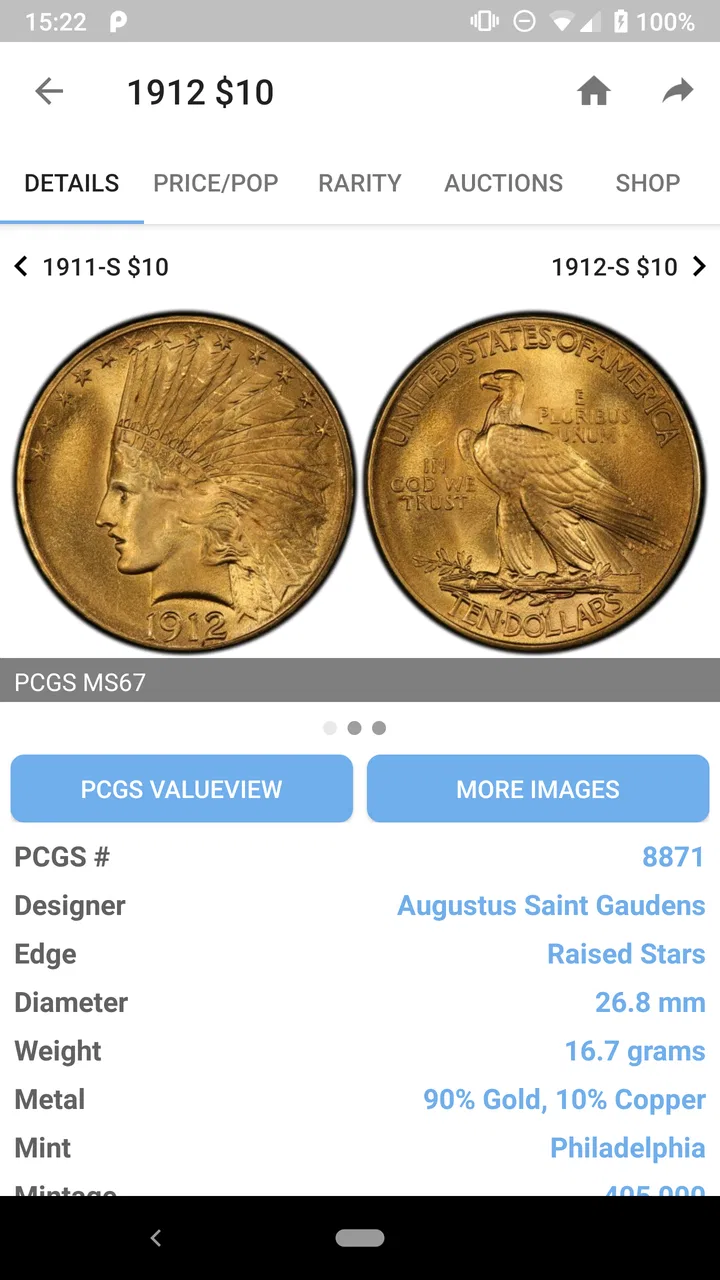
PCGS CoinFacts is a comprehensive app designed for coin enthusiasts, providing detailed information about U.S. coin values, history, and grading. Key features include a vast database of coin images, expert narratives, auction prices, and population reports. The app also offers tools for collectors to manage their collections and access market trends.
02Is PCGS CoinFacts available on both Android and iOS platforms?
Yes, PCGS CoinFacts is available for download on both Android and iOS devices. Users can find it on the Google Play Store for Android devices and the Apple App Store for iOS devices, ensuring wide accessibility for coin collectors using different platforms.
03Does the app require an internet connection to function?
While PCGS CoinFacts offers offline access to certain features like previously downloaded coin information, most functionalities, such as real-time auction data and market updates, require an internet connection. To fully utilize all features, it’s recommended to have a stable Wi-Fi or mobile data connection.
04Are there any costs associated with using PCGS CoinFacts?
PCGS CoinFacts offers a free version with basic features, but for advanced functionalities, users can opt for a subscription. The premium version unlocks detailed auction records, expert analysis, and other exclusive content, providing a richer experience for serious collectors.
05How user-friendly is the PCGS CoinFacts app for beginners?
PCGS CoinFacts is designed to be user-friendly for both beginners and experienced collectors. The interface is intuitive, with easy navigation and comprehensive guides to assist new users. Additionally, the app includes educational resources, making it accessible for those new to coin collecting.
Pros
- Comprehensive coin database available.
- High-quality images for detailed viewing.
- Regular updates with new information.
- User-friendly interface for easy navigation.
- Offline access to saved data.
Cons
- Limited to U.S. coins only.
- Some features require a subscription.
- Occasional app crashes reported.
- Large app size may affect storage.
- No support for non-English languages.

PCGS CoinFacts - U.S. Coin Val
Gallery